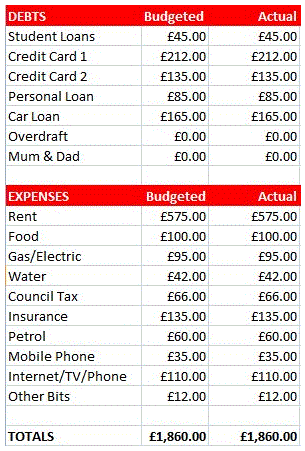
I try and view my monstrous student debt as a positive despite it seeming like a massive burden that needs to be dealt with. I know my student debt was for the sake of my education and supposedly for the greater good yet sometimes I question was it worth it at the end?
Funding higher education and a taking a degree course in the UK has turned into a debt game. Student debt is now Education, Education, Deprecation.
While at university studying your degree course may not be biggest thing you have to worry about. It’s your money management. You need to develop good student budgeting and money saving habits or managing your students finances will go out of the window. Taking your student finance lightly will cause you bigger worries in the long term.
In most cases when it comes to getting a university education the costs can be staggering. For many students going to university it will be the first time they’ve had to manage their own money and personal finances. Unfortunately with rising costs associated with university attendance students need to learn how to juggle their student income and expenses like food, rent, utility bills and loans.
In addition it will also be the first time they have access to credit and borrowing through an overdraft and possibly a credit card. Which means there is a price to pay for higher education and it can take practise to handle budgeting and borrowing for the inexperienced. Mismanaging your money can have an impact on your future credit rating.
A credit rating needed for renting a flat, getting a mortgage or loan. If you’re had credit problems and missed payments it will impact your credit score.
Large student loans, maxed out credit cards can impact on your credit ratings and be hanging over your health and well being for many years to come. Knowing you have this student debt baggage weighing you down can make you wonder if all the years of education was worth it.
Student debt is crippling university graduates with many not expecting to pay back the outstanding debt. After graduation the student loan bill and other student debt will have mounted up. Students from poor homes and backgrounds are faced with higher educational costs as they have to borrow more money to fund their higher education and living costs. In some cases the desperation of student debt has lead to depression and suicide as banks and loan companies hound students for money.
A good chunk of what you owe not only goes on the tuition fees but also the means to survive for three years with little income. Living costs and low graduate salaries don’t deliver on expectations of living the high life. After you qualify with a degree in hand it soon becomes apparent it’s the wrong sort of paper you need to eat, deal with bills, pay the rent, afford a mortgage or buy a car to get to work.
Student Debt Advice and Student Debt Help
Student debt is a financial pig so here are some practical student debt advice . Every year you’re in university and higher education you are building up your student debt. Therefore it’s important you get to grips on your student budgeting and manage your student finances.
The student loan for tuition fees isn’t the real problem at the outset because you don’t have to start paying it back straight away until your salary hits the current £25,000 minimum (The minimum is subject to change). The major concern and real issue are the interest payments on all your student borrowing. That’s the killer. Student loans are also wiped out after 30 years.
If you land on your feet into a well paid job your first pay check won’t go as far as you think. Not when you have credit cards, bank loans and you owe your parents a small fortune to after bailing you out from eating baked beans.
Graduate debts worries and the uncertainly cast a shadow over students who are concerned about the grim reality that once they graduate this debt needs to be tackled and managed. If you’re struggling to make payments you need to manage your lifestyle and debt situation.
Managing your student debt requires serious money tips for students. It is important to have an understanding of money. Set a student budget of incomings and outgoing funds and don’t waver. Choose a good student graduate bank account. Aim to pay off unpaid bills and higher rate bank loans and student credit cards first. Make sure you keep up with repayments to protect your future credit score. If you have borrowed from parents pay then Bank of Mum and Dad last – They usually offer the cheapest interest rates.
When you are at college or university your finances aren’t at the top of your agenda. You only care about beer, women, sex and having a good time. Paying back your student loan back is usually the last thing on your mind.
When the real world hits you it can be a struggle to survive. Life gets crazy in the adult world, everyone wants a piece of your attention and income.
In my youth I didn’t want much to do with financial management. Retirement seemed like decades away and something I didn’t need to worry or think about back then. After the financial mess I’d got myself in and the BUY, BUY, BUY of capitalist culture in was time to change and follow my Top 7 Financial Tips.
You’ve had a taste of freedom and independence and with that comes financial responsibly. I know student debt and the uncertain future is a worry. Education is important, the problem is education shouldn’t price us out of the market and put us in so much student debt.
There are high costs that go along with higher education. For this reason you should know where you money is going and learn how to manage your cash flow. Your student loans and time at university is for getting the education you are hoping for not giving yourself liver damage.
Managing your student finances is no picnic and gets problematic when you have limited money coming in. If your student finances aren’t managed it can create crippling debt for those students who lack budgeting skills and self control. Students need financial aid, student loans for many reasons mainly – funding for higher tuition fees and living costs.
The temptation for many is to thinks it’s all the money in the world and blow it on nights out and shopping trips. Maxing out overdrafts, student credit cards and loans in a short space of time. Don’t be irresponsible, all borrowing has to be repaid back to lending agencies and providers with added interest on your loans and borrowing on top – It’s not free cash. Which means your student debts can really add up over time.
In addition student loans are taken into account as part of your budget when applying for mortgages. The whole purpose of going to university is to secure a well paid job in your chosen field of work. As interest mounts up the poor students of today are often worse off for investing in their future.
It’s a scary through thinking that your loan account may take years to pay off and may never actually be cleared in full. Currently the debt is cancelled and wiped out after 30 years but that’s making student finance and further education feel like a prison sentence – A thirty year stretch and you’re free to go. You get less for murder than managing future student borrowing.
Student life is no long party when you witness student debt mounting up. It weighs heavy on young minds and there’s no promise of a career when you graduate. It all gets a bit scary to watch your spiralling student debt run away into the 30 year sunset.
Some lucky and select students don’t have to worry too much about money but if you are one of the many that do then monitoring and managing your student finances will be of paramount importance.
Paying off student loans are a heavy burden to bear for graduates. Many students have difficulties clearing their debts and the full cost of student debt is often misunderstood and misleading. Even if you are lucky enough to have your parents help with the costs and a college fund set-up its likely you’ll take out a student loan at some point.
I know how exciting and difficult living the student life can be. All the highs, all the lows. The joy of meeting new people, making new friends, hanging out with good company, drinking beer and the personal development you gain at the end.
When it comes to student loans always check the small print and terms of the borrowing. Some Student Loan companies don’t make it easy and attract a high rate of interest.
Student loans and the financing policies of education can get very messy. When you count for inflation the poor student will be worse off and you have to stop and think how it will affect the economy of the future.
I also know taking a degree isn’t a three year party. Surviving on a limited income, paying the rent, trying to make ends meet to put meat and vegetables on the table, all the while building up debt to fund an education. If you’re not earning while you’re learning then the true cost is a mountain of student debt.
The stress of student debt on top of your exams, dissertations all adds to student pressures. It important you focus on your study and forget about the mounting debt until your degree is over and you secure a job over the current threshold.
You won’t have to pay back any student loans until your salary reaches the pay back limit. So stop worrying (for now). Avoid using any credit cards, store cards and stay away from payday loans. Using these will only pile on the debt and interest payments. Extending your overdraft is also not a good idea in the long term.
Help with Student Debt
When living at home your food and financial needs are usually met by your parents but soon as you go to university you’ll have to learn how to fend for yourself. You need to make sure you have the bills and basics covered before you spend your student finance on nights on the town.
Your student loans and overdrafts won’t last as long as you think. Failure to manage your student loan instalments will result in more student debt and money problems. To avoid higher student debt the first thing is to organise your money and open a separate bank account for paying your bills.
The banks have plenty of options and interest free student overdrafts to help. Set up direct debts for all your outgoings and put money aside for rent, energy bills, phone, TV license and Internet access. You’ll all so need to keep money aside for travel costs and train tickets home. After this you might not have much money left for food, clothes, beer, takeaways and partying.
Student Banking:
If you’re not great with money having two accounts helps. Opening one bank account for bills and an account for day to day living is a positive way to stop study costs and student debt overwhelming you.
House sharing with other students or friends can help reduce costs and give you extra cash. Before paying your bills as a joint household you’ll need to agree on who pays which bills or share the cost between you all. Deciding beforehand will stop arguments and fall outs over who pays what.
Check your accounts regularly and ensure you are keeping a check on incoming and outgoing money to avoid extra fees or charges.
We all want to be in the debt free zone and getting on top of your student finances and budgeting will limit the student debt you incur. Indeed after the exams then student debt and money problems are a big concern. Rising tuition fees and higher living costs don’t help the matter.
Viewing student debt as bad is the wrong way to look at further education funding. In spite of you owing thousands the fact you have a degree should open up higher earning potential. Borrowing with student loans to invest in your development and career shouldn’t be seen as a negative liability but when you look at your student debt your stomach make turn a somersault.
Take Control of Your Student Debt. Student + Debt, the word have a nasty connection which can trap young people down for years. It could be that the real educational investment is money management?
Anyone want to add anything else? Maybe some student money tips, tricks, lessons YOU learned in college?