Budget Strip Club

No, this post isn’t about how to get lower strip club prices or where you can get hold of discount lap dancing coupons. Sorry to disappoint you.

Over the last few months I’ve cut costs and stripped down my budget which has lead me to wonder if I could reduce it even further. Is it possible to bring my outgoings down to frugal fractions.

What is the bare minimum you could survive on in areas like food, travel, entertainment? By going frugal and been more financially reserved would it be possible to shave even more off my budget.

You can have fun without spending much on entertainment and going to the club. Going out drinking costs a bomb and isn’t economically when you can party cheaper at home for 75% less dosh.

When I explained to friends that I didn’t what go out partying and drinking because I was on a tight budget they laughed and mocked me for using discount stores and going shopping in cheap shops and labelled me a bore.

It’s funny when people look down at you for doing something they don’t understand? It may seem like madness when I have a workable budget but I want to push the budget limit and see how frugal I can you go to pay off my debt faster.

Of course I would like to go out for a drink but I knew one thing would lead to another and the night would end up costing a fortune and they would try and drag me to a strip club somewhere so I said “no I can’t afford it”.

They offered to buy me drinks and sub me yet I still declined. The last thing I want is to get into debt with my mates again. I know that saying “no thanks” was the right thing to do.

While my friends are out partying drinking pitchers, spending their money and partying I’ll be saving money and keeping to my budget. I’m still figuring it all out and at times I feel a money mentor would help keep me on track and hold myself accountable.

If you want to get ahead you need to hold yourself accountable and if you can’t afford something then say “no”. Saying no is a good budgeting habit.

Let’s see them make fun and mock me for being a loser when my debt is paid off and I’m financially free. Once your debt is gone you can work towards early retirement and that’s when the fun really starts. The fun of doing what you want every day without any financial pressures or stress.

Many of my friends don’t seem that interested in their personal finances or dealing with their debt or pensions. I’ve tried to tell them that if they’re not careful they’ll be The Leftovers. While it’s important to live in the moment you never know what fate and misfortune may bring you. So live for today and plan for tomorrow which may include sacrificing nights out, staying in days and cutting back on things.
Millennial Money

The millennial money debate seems to cause a stir in the media. I hate stirs and  stereotypes when it comes to young people and money. Being born between early 1980 and the early 2000s we have witnessed massive changes and grown up in the digital age which is always switched on.

Most millennial articles discuss how generation X, Y, Z or whatever letter we’re on spend money, the brands we buy, are average salaries and their view points about finance.

We are told millennials aren’t saving, aren’t investing and are handling our millennial money and futures all wrong.

My Leftovers post clearly examines my own fears of a millennial who feels angry and afraid of the future. Who in their twenties doesn’t worry about their careers, cash flow, condoms and the price of cashew nuts?

Today money troubles seem to hit the young with a slap in the face. It’s the school of hard knocks. After college and university tuition fees we are stacked up to our eyeballs in debt, unable to afford our own home and saving and investing for our financial future is a laughable joke.

If you don’t have spare money at your disposal how can you save anything? Right now poor millenials don’t have enough money to invest and there is too much conflicting financial advice on how to do it.

How can millennials do any financial planning when your money disappears on high rents, student loans, travel, utility bills and food? Are very lives are built on instability and insecurity. Not much can be planned or saved for when it’s a case of living pay cheque to pay cheque.

Many millennials experienced the great recession and watch their parents pension plan sink into the toilet when markets crashed and struggled to find high paying work during austerity.

The fact is money sucks for all civilisations and we all deal and think about money in different ways. When it comes to millennial finance there is a belief we are crazy wasteful spenders. Everyone is quick to judge and jumping to conclusions about millenials. Older generations always complain about youth, they think we are lazy, materialistic and a bunch of narcissist rebels. They forget they were young once.

This attitude, like the stereotyping of students is a big generalisation of how we handle our money and lifestyle. Millennials can be dizzy with our money but the reality is many are hard up and not all of them are in a position to save money.

What more surprising is the people complaining about “the youth of today” are the very people who we pay the rent to every month. Some millennials still have no choice but to live at home with their parents.

I lack brand loyalty because the brands don’t have any loyalty or faith in us. How can we engage with a capitalist economy that wants us to buy all the time. The only reason they engage with us at all on social media is because they want us to spend money with them. If business can’t capture the attention of Generation Y they can’t sell to us.

We are disengaged because right now it seems hopeless. How can we feel part of an economy and system that demands so much of us? Where the best financial advice we get is “make a budget”. I publish my own budgets on here and they weren’t always happy reading. Crippled by debt for my education and further disadvantaged by own silly money mistakes. A fool at both ends – not saving and not managing my money as well as I should.

Luckily things are changing. I’m budgeting, have imposed spending cuts, become more frugal and aware of my money. They are lots of financial pressures facing millennials and sound financial guidance that you trust isn’t easy to come by.

Every generation past, present and future will bitch about the “youth of today” and “how it was when I was a kid”. The thing that they forget is the youth is the future of human-kind. The future always rest on the next generation, it’s them that will find the cure for cancer and engineer technology to advance the species.

Each generation needs to improve the world in some way. Maybe in the future wealth won’t matter and people will laugh at the concept of money and personal finance. After all money and its value is a socially constructed system. When the economy sucks everybody complains, everybody suffers.

Past generations blame millennial money management on the failing economy. For millennials the retirement age will be so high we’ll just about be able to claim our first state pension on our death beds.

We don’t enjoy the struggle for survival. It’s easy to criticise us when our optimism, finances and choices have dried up. Our generation are a bunch of financial refugees.

There is no doubt young people need help with their finances. Me included.

Budgeting Leftovers

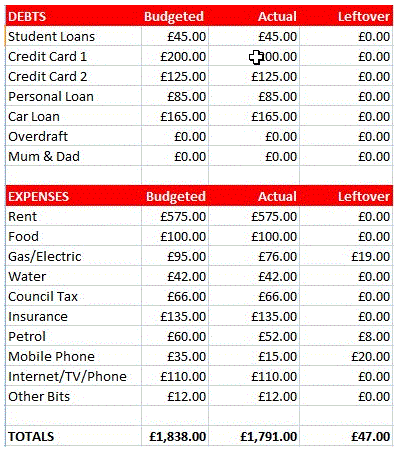
I’ve change my budget and added a leftover column. The idea with the new budget is to put a few quid aside. Anything extra that’s leftover I can use towards paying my debt or placing it in the kitty.

I’ll repeat until the balance hits zero, starting with the credits cards. I’ve made some big saving by reducing my food bill further, switching energy providers and now my mobile phone contact has ended I’ve change to pay as you go.

The bad budgeting news is my eBay wheeler dealing has ended. Selling on there was as a welcomed cash boost. I’ve managed to get rid of a lot of junk and unwanted items. It would be nice to replace this lost income which has helped get me through so I’m considering putting some advertising on this site.

The good news thanks to my sales I have managed to amass a total of £1948 in the kitty. I’m so proud I’ve managed to do this. Now should I put that straight into my credit card debts or clear the overdraft?

How Am I Going To Pay Off My Debt?

This is a good question that I asked myself and I suppose the answer is to get smarter with my money and work towards a debt repayment plan. While I would say I’m not the most reckless person with money I do like to spend it and £65,235 is a lot of personal debt for any young person to carry around.

The problem with money is it’s easier to spend than earn and if you’re not watching it just disappears. With your money gone and your desire to buy things still strong that’s when personal debt happens. And debt makes your money disappear and slip through your fingers even quicker due to the interest payments you have to pay back.

Debt has had a negative effect on my life and tied me down for too long. So what can I do about it? How do you begin to find ways out of massive debt?

I know I’ve made financial mistakes and that there isn’t a magic solution to get rid of this debt. In order to pay off this debt burden I’m going to have to evaluate my personal finances and change how I manage my money.

I admit I have got myself in this mess and I’m the only person that can fix it. To tackle this debt problem that has built up over the years I’m going to have to face it head on.

Here are some ideas that will help:

•      Be more financial responsible, no more crazy spending.

•      Start using a budget and overhaul my bad habits.

•      Focus on needs not wants.

•      Payoff as much debt as I can afford by cutting my expenses.

•      Shop around more for better deals.

•      Less of those treats.

•      Increase my minimum payments.

•      Read up on personal finance.

•      Waste less money and look after those pennies.

•      Work some overtime and put the earning into my debt.

•      Find people and resources that offer debt advice.

•      Master the art of frugalness.

Doing this will aid me in eliminating debt forever and help secure a better financial future. Breaking the bondage of debt and reaching financial freedom is possible. You have to dedicate the time to learn how to manage your money, change your money habits and form new financial disciplines.

Be More Frugal

Living more frugally will help you consider where and what you spend your money on. Being more frugal will help you understand the difference between wants and needs. I used to think I needed to buy lots of stuff and keep up with the lifestyle of friends and family. I’ve since turned over a new leaf and changed my financial habits.

Being frugal will make your money go further. Using a little frugal finance you’ll be able to save money and pay off your debt quicker.

Use a budget and seeing where you can save money is a good starting point. It’s too easy lose track of your cash and overspend, so fix the amount you spend each week.

To become more frugal doesn’t mean you are cheap, tight or can’t treat yourself and others, it only means you more sensible with the money you’re got. You might want to spend less on grocery bills, fast food, eating out, clothes, music, games, gadgets, music and takeout coffee.

Giving up a few luxuries will save money but you can also shop around for the best deals and discounts when you do need something.

You can save thousands by reviewing your current debt expenses, find cheaper mortgage and insurance deals and switch to interest free credit cards. We waste lots of money spending on debt interest payments so look for better deals.

Debt is so overpriced compared to the money we make on our savings, searching out better deals will save money and enable you to pay more into your debts to pay them off quicker.

Shop around for cheaper energy bills, lower mobile phone costs, switch Internet providers, cancel TV subscriptions or reduce down your current package.

A few ideas to help you save a small fortune include, taking packed lunches to work, avoid branded foods and goods that cost more, plan your meals to stop wasting food and buy in bulk if it saves money on the things you use.

Find cheaper hobbies, activities and entertainment you can do for free. Save money by becoming more healthy, cook cheaper food like frozen veg, when you can walk or cycle instead of using the car, cut down on your booze and of course stop smoking.

Access to easy credit and shopping online has made spending money easier. Not everything you buy with a few clicks is a bargain and sales exist to keep you spending on useless junk you don’t really need.

Stop using spending as a means of escape. When we buy something we want it gives us a little kick and a boost. Often we spend money to try cheer ourselves up and make us happy. Shopping gives us a high and the thrill of getting something new, something that briefly lifts up our spirits in the short term.

People shop for convenience, to alleviate boredom and get a buzz. This spending cycle of highs and lows can turn some people into shopping addicts and can impact their finances and relationships.

Are you spending too fast? Are you in danger of falling into bad heavy debt? Before you buy anything stop and think – Do I actually need this, could I go without? A quick way to curb spending is to stop acquiring stuff that don’t add value in your life. Cut back and learn to be a more frugal and savvy shopper.