The Formula for Being a Grownup

I’ve haven’t figured it out yet. That secret formula to been a grown up. It’s probably in a book I haven’t read or maybe I was hungover and off sick the day they gave that lecture. Life is far easier as a kid. You can use your imagination to live your dreams in an afternoon. When you hit your 20’s reality suddenly bites.

I’ve “legally” being a grown up from age 18. In adulthood you expect things to work out, get better. No one can tell you what to do, you can vote, drink alcohol and sign important documents like a tenancy agreement.

Being grownup isn’t that cool or wonderful because you have to make your own decisions and take responsibly for the outcome. That dream job isn’t what you thought, you’re single, lonely with no love interest, dear friends get promotion and move away, your finances are a mess and screwed by debt, the flat is a bombsite, you have to hold down a job and then pretend life is going well on social media to keep up appearances.

You probably feel it wasn’t supposed to be this way. They is even have a name for this. It’s called a Quarter Life Crisis – https://en.wikipedia.org/wiki/Quarter-life_crisis.

When you look at the goals you planned to accomplish at by age 25 it’s likely to be disappointing. You aren’t the CEO of the company, a millionaire playboy, happily married with 2 kids or playing professional football.

You expected being grownup to be something different, the time of your life. Instead it’s all stress and balancing relationships with people and things you love and hate. Life is tougher. It turns out we are expected to multitask and balance everything.

We try our best but it is just not possible……

How can we be so perfect and compete with our hero’s and the myths we see in the media and our old childhood dreams of what we thought our life’s would turn into?

How can you stay positive, look on the bright side when we can’t even hit the piss pot? How can we take back control of our lives, meet our ambitions and stop this feeling of failure, of not meeting our own expectations of adult life?

We put too much pressure on ourselves to have it all figured out and have our lives mapped out and on track by 25. I’ve discovered that’s a load of bollocks. Anxiety and insecurity are part of the deal. You can’t plan the rest of your life in an afternoon like you did when you were aged 8.

You might meet the woman of your dreams at the restaurant…..

Or you might not.

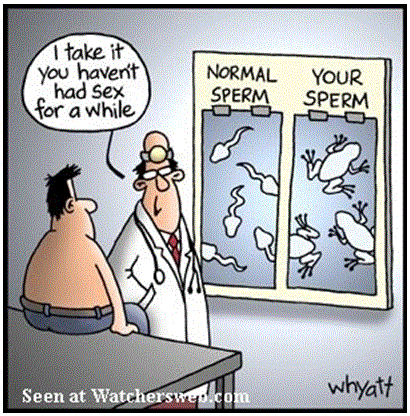
It’s OK if you’re single and don’t have a partner yet. Being single isn’t such a bad thing. You don’t have to find “the one” in your twenties. The wild sex and relationship goals can wait a while.
Be patient. Be grateful you don’t know what’s going to happen or life would be very dull. It’s all unknown and it’s natural to fear the unknown.

If you want to get through your quarter life crisis simply admit you have no idea how to be a grownup right now. Lap it up. You’re still learning. You haven’t figured out your life just yet. Don’t panic neither have I. I’m as clueless, frustrated and lost as you are.

I like the idea of making your own path. What makes it hard for people in their twenties trying to follow their passions is you can’t be true to yourself if you don’t know who that is yet.

There are ways to tell when you’ve become an adult. You have to look after yourself, look after others, try bring some order to the chaos and do your own dusting. There are no tidy answers. Twenty-something adult life is messy, we can all feel lost. Sometimes I feel grown up sometimes I’m a immature spoiled little brat.

This website started out of student boredom and loneliness, as it has grow so have I. You’re not grown-up until you been around the block, experienced a little of life’s challenges. Don’t treat it as a setback because you feel you’re not moving forward.

Obstacles and pain are a part of life, yet you can grow from it. You’ll need to make some changes and choices in your life. You can make 20 Changes in 20’s whatever age you are. And while being young and stupid is always easier, being older and still being stupid will bring the same results no matter what age you are.

Please be patient with yourself and you’ll find out who you are and what you really want.
Creating Your Own Monthly Budget

Knowing how to create a budget is the most vital financial skill that will help you on your way to financial freedom. In my experience good money management always starts with a budget.

The idea of a monthly budget is to track your spending. Using a budget is the best way to get your financial house in order and find out where you money is going. The first time you sit down to run your budget numbers can be daunting and painful. If you’ve never written a monthly budget in your life this post will explain how to write one and hopefully help you stick to it.

Why Should You Learn How to Budget?

It will help discipline you to put your money in all the right places.  A budget is designed as a plan for your income and outgoings and to make sure you live within your means. See it as a financial tool so you know where your money is going and then decide and workout where you really want it to go.

Tracking your money is the first step to taking control of it and working out a plan to deal with your debt, saving, investing and fun money. I think if you monitor your spending more closely you’d see spending patterns that could reduce your monthly expenses.

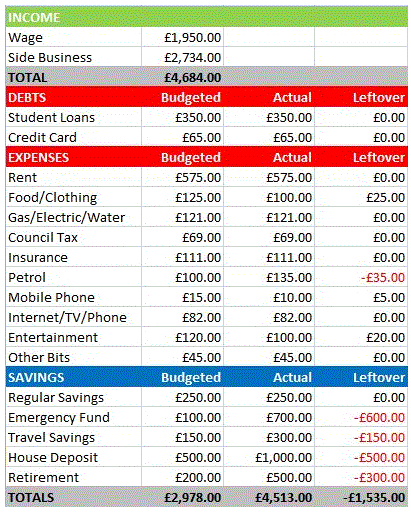
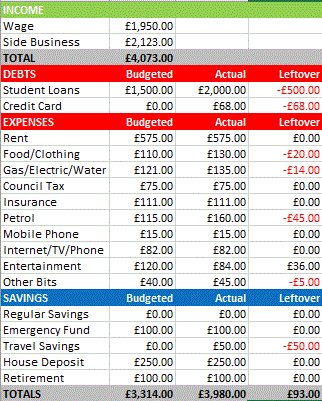
How I write mine will vary to yours. I can write my monthly budget in around 10 minutes or less thanks to practise. My budgets shows the intended budgeted amount and how much I spend each month in the actual column. Using the leftover column can show at a glance where the budget was on track and where my finances went overboard.

Your budget doesn’t need to a boring task and track every penny, it will give you an a rough idea of what you spent in each category. See it as a tool to help you see where your money goes so you can have better control over your money. Budgeting skills help avoid the temptation to go over budget and gives you a sense of accomplishment.

My budget has a Budgeted, Actual and a Leftover column. You don’t have to do it that way but the leftover column  makes it easy to quickly see if the figures are over or under in each area. Budgets are personal thing so let’s get started and do what works for you.

I started my first budgets by writing them out on paper however I recommend using a spreadsheet program to do the calculations for you. You can design your own spreadsheet or use old fashion pen and paper. The important thing is to start tracking your money and keep your budget on the straight and narrow.

When you start budgeting you can take control of your money. This is my step by step guide to creating a budget that works for you:

Net Income (Take Home Pay)

How much money you end up with after the pension and taxes. This will be easy if you are on a fixed yearly salary for others who are paid overtime, commissions or who are self employed your monthly take home pay will vary and I recommend budgeting on the monthly average.

Note: If you not in your company’s pension scheme yet then investigate joining.

Fixed and Variable Expenses

Fixed expenses that you have to pay every month and usually don’t change. Put these in first. For example rent/mortgage, energy bills, water, council tax, insurance, Internet access.

Variable expenses that you have include food, clothes, petrol, entertainment, birthdays gifts/Christmas presents or any other odd expenses that crop up.

Debts

Next are any debt repayments excluding mortgage that you have to make on credit cards, loans or borrowed cash from other places. Add it to the budget and make sure you have a debt repayment plan you to get your debts to zero as soon as possible. If your total required budget is close or over your take home net income you need to find a way to lower your expenses or make more money or both.

Savings

When your budgeting is working you should have money left over to save and invest for the future. Set some saving and investing goals for your retirement, emergency fund, holidays and other things you want to save for. The percent of income you save on each saving goal up to you. I suggest saving at least 15% of income for your retirement.

Monthly budgeting tips:

Creating a budget doesn’t mean that all of your money troubles are cured. Once you have a budget consider it a work in progress that evolves with your finances. Budgets aren’t meant to be set in stone and never reviewed or looked at again.

Think of a budget as a monthly snapshot of income, spending, saving and investing and the leftovers are for enjoying yourself. Being on a budget doesn’t mean a life of not having fun, going out or been so strict with money it makes you unhappy. All it means it you know when to say “Yes” and when to say “No” because you have planned your money in advance. A budget should help set you free and help you live in harmony with your cash flow.

Of course if you are struggling with debt repayments then use your budget to help you tackle and clear that debt by:

  • Workout the minimum you need to live off and use the rest for any debt repayment and saving.
  • Investigate where you can cut back costs and save money so you can do the most with the money you have.
  • You can live on a lot less and save a lot more if you increase your income. When you get that pay rise save the money or use it for debt.
  • Lastly your budgeting will fail if you don’t do your best to stick to it and stop the random spending.

Learning how to budget can help you unearth and free up some spare money or reveal your money troubles. Budgeting may bring you discomfort, it may be shocking to see how much is lost and wasted on debts, silly spending sprees and expensive services. Yet do not despair you’ll find out where you cash is going.

Even “sad budgeting” will let you see the happy bigger picture and find out your true money facts. I have faith that you can do it and create a budgeting system that works for you.

Trust me that having a budget is the key to and the starting point for financial freedom. Keep your budget simple, updated and workable for you. You may not enjoy your budgeting right now but it will get better and be worth it in the end.

Change in my Saving Plan to Paying Off the Student Loan

Should I save/invest money or payoff my debt? I have been thinking about this over the last few weeks. You could look at the numbers and work which is best option but for me I favour clearing debt first before investing.

Good or bad credit (debt) affects many of us. If you are head over heels in bad debt the interest rate and money you pay back will be higher than your saving returns so the debt wipes out any savings you have. The obvious answer is to pay off any bad debt.

I’m happy with my good saving habits, I’ve watch it start at £0 and grow fast thanks to my extra business income. I’m also happy with my new found budgeting skills and can keep expenses down. I’m no financial expert but I have a plan and that is the most important thing. And when you have a plan you can adjust your plan to your needs as required.

From here I’m now going to suspend and slow down on my savings plan and focus on clearing off my student loan. I’m re-evaluating my master plan and my debt eats into my net worth big style. While it’s comforting having savings and I’m happy with the amounts saved but it hit me hard that my debt beats my savings down. I want my debt gone so the big push is to get all debt cleared faster.

Although you don’t start repaying any student loans until you graduate and hit the minimum income threshold. At the end of the road the student debt you amass needs to be paid back and interest is mounting from day one.

Making the minimum or slower student loan repayments will cost you more in the long term. Unless your plan is to wait for the debt to be written off in your 50’s or to put it bleakly you die before its all paid off. You may even die of fright when you look at a student loans financial figures in real terms.

I think my motivation to save isn’t as great as the new motivation to pay off debt. I did wonder if I should use my saving to pay some of the debt off. Then I kicked that thought out of my head because it would undone all my good saving habits.

Whatever choice you make it will affect your net worth. Anything that gets us closer to faster retirement is a good thing and been debt free will grant us freedom. When you make that last payment you’ll feel happier and debtless. Which is great.